
1. ആമുഖം
The Audix Fireball-V is an ultra-small professional dynamic instrument microphone designed for clear and natural sound reproduction. It features a cardioid pickup pattern for effective isolation and feedback control, making it suitable for various musical applications. This manual provides essential information for the proper setup, operation, and maintenance of your Fireball-V microphone.
പ്രധാന സവിശേഷതകൾ:
- Cardioid pickup pattern for isolation and feedback control
- Low impedance design
- Integrated volume control knob
- Frequency response of 50 Hz – 16 kHz
- Optimized for harmonicas (diatonic and chromatic) and beatbox
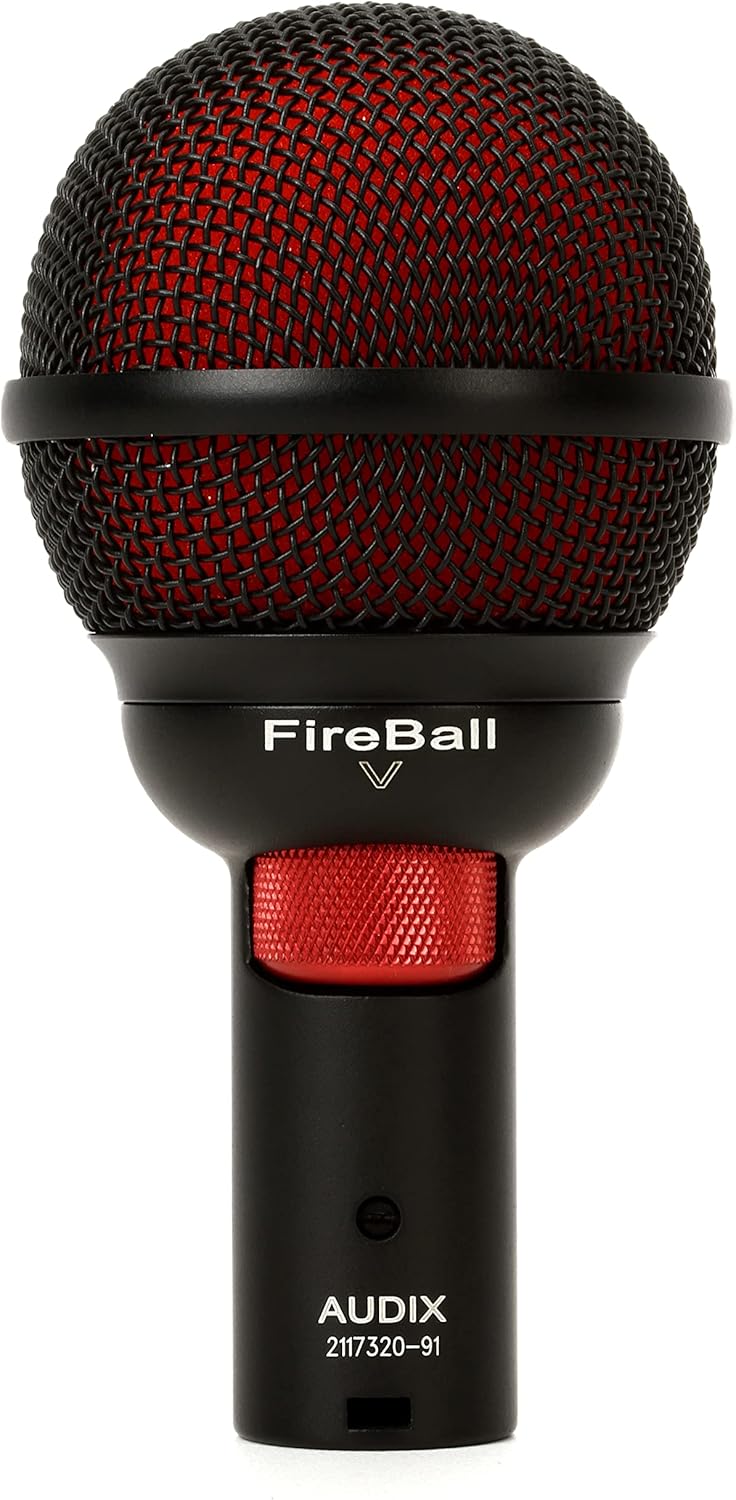
ചിത്രം 1: മുൻഭാഗം view of the Audix Fireball-V Dynamic Instrument Microphone.
2. ബോക്സിൽ എന്താണുള്ളത്?
Upon unboxing your Audix Fireball-V, please ensure all components are present:
- Audix Fireball-V Dynamic Instrument Microphone
- മൈക്രോഫോൺ ക്ലിപ്പ്
- ചുമക്കുന്ന സഞ്ചി

Figure 2: Audix Fireball-V with included accessories.

Figure 3: Included microphone clip.

Figure 4: Audix carrying pouch.
3. സജ്ജീകരണം
Follow these steps to set up your Audix Fireball-V microphone:
- Attach the Microphone Clip: Securely fasten the provided microphone clip to a standard microphone stand.
- മൈക്രോഫോൺ മൌണ്ട് ചെയ്യുക: Insert the Audix Fireball-V microphone into the clip. Ensure it is firmly seated.
- XLR കേബിൾ ബന്ധിപ്പിക്കുക: Connect a standard XLR cable (not included) to the microphone's XLR output. The Fireball-V uses a 3-pin XLR connector.
- ഓഡിയോ ഉപകരണങ്ങളുമായി ബന്ധിപ്പിക്കുക: Plug the other end of the XLR cable into your mixer, audio interface, or amplifier. The microphone is designed for professional audio equipment.

Figure 5: Connecting an XLR cable to the microphone.
4. പ്രവർത്തന നിർദ്ദേശങ്ങൾ
The Audix Fireball-V is a dynamic microphone, meaning it does not require phantom power. It is ready for use once connected to your audio system.
വോളിയം നിയന്ത്രണം:
The Fireball-V features an integrated volume control knob located on the microphone body. This allows for convenient adjustment of the microphone's output level directly at the source. Rotate the knob clockwise to increase volume and counter-clockwise to decrease it.

Figure 6: Detail of the microphone head and volume control.
Placement for Optimal Sound:
- Harmonica: For harmonica, hold the microphone close to the instrument, cupping it with your hands to achieve a full, rich tone. Experiment with distance and hand position to find your preferred sound.
- Beatbox: For beatboxing, position the microphone directly in front of your mouth. The cardioid pattern will help capture your vocal percussion while minimizing ambient noise.
- Other Instruments: For other instruments, position the microphone to capture the desired sound. The cardioid pattern is effective for isolating individual sound sources.
5. പരിപാലനം
Proper care will extend the life and performance of your Audix Fireball-V microphone:
- വൃത്തിയാക്കൽ: Use a soft, dry cloth to clean the exterior of the microphone. Do not use liquid cleaners or solvents, as these can damage the finish or internal components.
- സംഭരണം: ഉപയോഗത്തിലില്ലാത്തപ്പോൾ, പൊടി, ഈർപ്പം, ശാരീരിക കേടുപാടുകൾ എന്നിവയിൽ നിന്ന് സംരക്ഷിക്കുന്നതിനായി മൈക്രോഫോൺ അതിനായി നൽകിയിരിക്കുന്ന ചുമക്കുന്ന പൗച്ചിൽ സൂക്ഷിക്കുക.
- കൈകാര്യം ചെയ്യൽ: Avoid dropping the microphone or subjecting it to harsh impacts. While durable, excessive force can affect its performance.
- പരിസ്ഥിതി വ്യവസ്ഥകൾ: തീവ്രമായ താപനില, ഉയർന്ന ഈർപ്പം, നേരിട്ടുള്ള സൂര്യപ്രകാശം എന്നിവയിൽ നിന്ന് മൈക്രോഫോൺ അകറ്റി നിർത്തുക.
6. പ്രശ്നപരിഹാരം
If you encounter issues with your Audix Fireball-V, consider the following:
- സൗണ്ട് ഔട്ട്പുട്ട് ഇല്ല:
- Check all cable connections (microphone to XLR, XLR to audio equipment).
- Ensure the volume control knob on the microphone is not set to minimum.
- Verify that your audio equipment (mixer, interface) is powered on and input levels are correctly set.
- Test with a different XLR cable if possible.
- Poor Sound Quality / Feedback:
- Adjust microphone placement relative to the sound source and speakers to minimize feedback.
- Ensure the microphone is pointed directly at the sound source, utilizing its cardioid pattern for off-axis rejection.
- Check input gain levels on your audio equipment; excessive gain can lead to distortion or feedback.
- ഇടവിട്ടുള്ള ശബ്ദം:
- Inspect the XLR cable for any damage or loose connections.
- Ensure the microphone's volume knob is stable and not accidentally moving.
7 സ്പെസിഫിക്കേഷനുകൾ
Detailed technical specifications for the Audix Fireball-V microphone:
| ഫീച്ചർ | സ്പെസിഫിക്കേഷൻ |
|---|---|
| ഇനത്തിൻ്റെ ഭാരം | 12.3 ഔൺസ് |
| പ്രതിരോധം | 150 ഓം |
| മൈക്രോഫോൺ ഫോം ഫാക്ടർ | മൈക്രോഫോൺ മാത്രം |
| ഉൽപ്പന്ന അളവുകൾ (L x W x H) | 8.8 x 4.35 x 2.6 ഇഞ്ച് |
| പവർ ഉറവിടം | കോർഡഡ് ഇലക്ട്രിക് |
| മെറ്റീരിയൽ | ലോഹം |
| സിഗ്നൽ-ടു-നോയിസ് അനുപാതം | 76 ഡി.ബി |
| ചാനലുകളുടെ എണ്ണം | 1 |
| ഫ്രീക്വൻസി പ്രതികരണം | 50 Hz - 16 kHz |
| കണക്റ്റിവിറ്റി ടെക്നോളജി | XLR |
| കണക്റ്റർ തരം | XLR |
| പ്രത്യേക ഫീച്ചർ | കോർഡഡ് |
| അനുയോജ്യമായ ഉപകരണങ്ങൾ | Professional Audio Equipment (e.g., mixers, audio interfaces, and recorders) |
| നിറം | കറുപ്പ് |
| പോളാർ പാറ്റേൺ | ഏകദിശയിലുള്ള (കാർഡിയോയിഡ്) |
| ഓഡിയോ സെൻസിറ്റിവിറ്റി | 45 ഡെസിബെൽ |

Figure 7: Technical diagrams including dimensions, frequency response, and polar patterns.
8. വാറൻ്റിയും പിന്തുണയും
For warranty information and technical support, please refer to the official Audix webസൈറ്റിൽ ബന്ധപ്പെടുകയോ അവരുടെ ഉപഭോക്തൃ സേവനവുമായി നേരിട്ട് ബന്ധപ്പെടുകയോ ചെയ്യുക. ഏതെങ്കിലും വാറന്റി ക്ലെയിമുകൾക്ക് വാങ്ങിയതിന്റെ തെളിവായി നിങ്ങളുടെ വാങ്ങൽ രസീത് സൂക്ഷിക്കുക.